
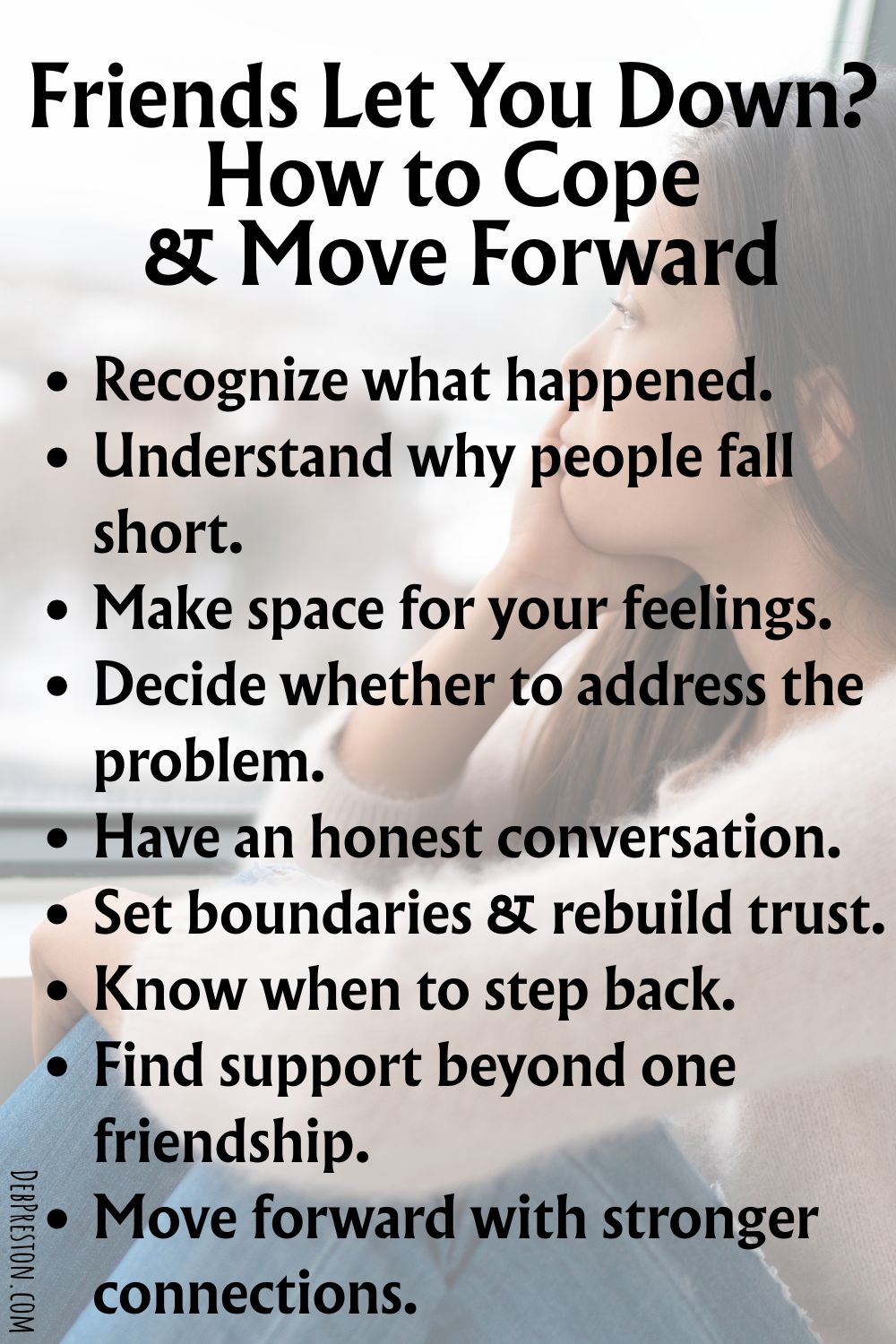
Friends Let You Down? How to Cope & Move Forward
Chances are good your friends let you down.
Are you in your 20s? 30s? 40s?
Are you single? Married?
Do you have kids? No?
Busy at work? Unemployed?
Are you a living, breathing human being?
If so, there’s a pretty good chance your friends let you down at least once, but probably a lot more.
They’re the friends who couldn’t hang out anymore after they started dating someone.
They’re the friends who reply to texts two weeks later...or never. They never answer when you call and are only available when it’s convenient for them.
They’re the friends who always have a new explanation as to why they can’t hang out. They say they’ll help you move but have better plans come up and then no call, no show, and don’t answer your call or texts.
I used to think this was a phenomenon of entering your 30s. People have more serious and time-consuming jobs, they’re starting to get married and have kids, so of course they have less time for their friends.
But no, that’s not true.
Because when I thought about it, I saw the same stuff in college. You would plan something and people would say they’d “try” to make it.
But really that just meant they’d see if any better plans came up between now and then.
If nothing better came up and they were in the mood that day, they’d grace you with their presence. Hooray!
It’s maddening! What do you do when your friends let you down? How many times do you forgive and show them grace?
Do you keep offering to hang out? Do you keep calling and texting?
Or do you just give up on them?
I’ve learned a few things from experience that have helped me to maintain my sanity.

Recognizing What Happened
Before you decide how to feel or what to do next, take a step back and look at what actually happened. This means checking if this is a one-time issue or part of a bigger pattern, and making sure you're looking at facts instead of guesses.
Distinguishing an Isolated Incident From a Pattern
Ask yourself if this is an isolated incident or something that keeps happening. A friend canceling plans once last week is different from a friend who has consistently bailed on you for a long time.
Think about your friend's normal behavior. Do they usually show up for you, or is bad behavior part of how they've always acted?
Here's a simple way to check:
- One-time slip: Out of character, followed by an apology
- Repeated pattern: Happens often, with excuses instead of real change
If you notice a common denominator in these letdowns, like your friend always canceling when you need them most, that pattern matters much more than a single bad day.
Looking at the Bigger Picture
Zoom out and think about your whole friendship, not just this one moment. Has your friend been a positive presence for a long time, or has this kind of thing happened before, maybe even recently?
One tough moment doesn't always cancel out years of support. But if you keep noticing the same problems coming up, that says something too.
Try to picture this from your friend's side as well. A different perspective might reveal stress, personal problems, or things you might not know about.
This doesn't excuse hurtful actions, but it can help you understand them better.
Looking at the full picture can help you to avoid both overreacting to one event and/or ignoring a real problem that keeps repeating.
Separating Facts From Assumptions
It's easy to mix up what actually happened with what you assume happened. Stick to the facts: what was said, what was done, and when it happened.
Watch out for negative comments or assumptions that jump straight to the worst explanation. For example, telling yourself "they don't care about me at all" is an assumption, not a fact.
Sometimes what upsets you the most is actually a form of psychological projection, where your own fears or insecurities shape how you see your friend's actions.
This doesn't mean your feelings aren't valid. It just means it helps to slow down and ask, "What do I actually know versus what I'm guessing?"
Separating facts from assumptions will give you a clearer, calmer view of the situation.
Understanding Why People Fall Short
Most of the time, friends don't let you down on purpose. Personal problems, mismatched expectations, and trouble communicating are usually behind it.
Personal Problems and Difficult Times
Your friend might be dealing with things you don't know about. Money problems, family issues, or health struggles can take up all of someone's energy.
When people go through tough times, they often pull back from others. This isn't always about you.
Mental health issues can also play a big role. Anxiety, depression, or stress can make it hard for someone to show up the way they normally would.
Someone who's struggling inside may cancel plans, forget to reply to texts, or seem distant. It doesn't mean they don't care about you anymore.
Different Expectations in Friendship
You and your friend might also see the friendship differently. Your own expectations could be higher than what they think is normal for a relationship.
For example, you might expect a text back within an hour. They might think a reply the next day is fine.
High expectations aren't wrong, but they can lead to disappointment if they don't match.
Some people expect friends to attend every event. Others believe a friendship can thrive on occasional check-ins.
Here are a few common areas where expectations often clash:
- How often you talk: daily texts versus once a week
- Support during hard times: being there in person versus a quick message
- Making plans: who reaches out first
- Type of support: listening versus offering advice
Limits in Communication and Emotional Capacity
And sometimes, people simply run out of emotional room. Good communication takes energy, and not everyone has the same amount to give.
Your friend might want to give you emotional support, but they may not know how. Talking about feelings is hard for a lot of people, especially if they didn't grow up learning how to do it.
Also, some people avoid conflict.
Instead of saying they're overwhelmed, they might just disappear for a while. This can feel like they let you down, but it may just be a sign they don't know how to express what they need.
Making Space for Your Feelings
When a friend lets you down, your own feelings deserve attention before you try to fix anything else. It's important that you have a safe space to feel hurt, angry, or sad without rushing to explain it away.
Naming Hurt, Anger, and Sadness
You might feel more than one emotion at once, and that's normal!
Try to name what you feel instead of pushing it aside.
You could be hurt because you expected support. You might be angry because a promise was broken.
Sadness can show up too, especially if the friendship meant a lot to you.
Putting words to your emotions helps you understand them better. It also helps to stop the emotional pain from building up inside you.
A few ways to do this include:
- Writing down how you feel in a journal
- Saying your feelings out loud to yourself
- Talking to someone you trust
Naming your feelings is the first step toward feeling better.
Avoiding Self-Blame
It's easy to turn hurt into self-blame, but that rarely helps.
You might start asking yourself what you did wrong.
Maybe you wonder if you asked for too much or trusted the wrong person. These thoughts are common, but they're not always true.
A friend letting you down is often about their choices, not your worth. Try to remind yourself that one disappointment does not define your value as a friend.
The only thing you truly control is how you respond, not how someone else acts. Give yourself the same kindness you would give a friend in your position.
Choosing a Healthy Way to Cope
Once you notice your feelings, choose a healthy way to work through them.
Some people feel better after talking things out. Others need quiet time alone to think.
Physical activity, like walking or stretching, can also help to release built-up stress.
Avoid coping in ways that could hurt you more, like bottling up emotions or lashing out. Instead, focus on habits that support your mental health.
Good options include:
| Coping Method | Why It Helps |
|---|---|
| Talking to a trusted person | Offers support and outside perspective |
| Journaling | Helps organize thoughts and feelings |
| Physical activity | Reduces stress and tension |
| Rest and quiet time | Gives your mind space to process |
Finding even one good thing that helps you feel more calm can make a real difference.
Deciding Whether to Address the Problem
Not every letdown needs a big conversation. Before you decide on your next move, think about how much this really bothered you and whether it's part of a pattern.
Questions to Ask Before Reaching Out
A few important questions can help you figure out your next step.
Ask yourself these things first:
- Was this a one-time thing or does it keep happening? A pattern is harder to ignore than a single slip-up.
- Did they know how much this mattered to you? Sometimes friends don't realize the impact of canceling at the last minute.
- What do you want to happen after you talk? An apology? A change in behavior? Know your goal before you start.
- Are you upset about this specific thing, or is it built-up frustration? Be honest with yourself here.
Answering these questions before initiating a conversation can help you make better decisions about whether the conversation is even worth having.
Choosing the Right Time
Timing matters a lot when you bring up a problem with a friend.
Don't try to talk about it when you're still angry or when your friend is stressed, busy, or distracted. Wait until you've both had time to cool off, but don't wait so long that the details get fuzzy or the moment feels random.
The right time is usually when you're both calm and have privacy. Avoid texting about serious issues; a phone call or face-to-face talk works better for anything that feels important.
Pick a moment when you can give the conversation your best efforts without rushing through it.
Knowing When to Let a Small Issue Go
Not every disappointment is worth a conversation.
If your friend showed up ten minutes late one time, or forgot to text back for a day, that's usually not a big deal. Small mistakes happen, and friends aren't perfect.
Ask yourself if you'll still care about this in a week. If the answer is no, it's probably fine to let it go.
Save your energy for issues that affect trust or happen again and again. Letting small stuff slide can actually make your friendship stronger, since it shows you're not keeping score over every little thing.
Having an Honest Conversation
Talking to your friend about how you feel is often the right thing to do. Good communication can help clear up confusion and may even bring you closer.
Using Clear and Respectful Language
When you talk to your friend, try to keep your words simple and calm. Say exactly what happened and how it made you feel, without adding extra drama.
For example, you might say, "I felt hurt when you canceled our plans last minute" instead of "You always ruin everything." This keeps the focus on the issue, rather than on attacking your friend.
Think about how you want to have this talk.
A phone call often works better than text messages for serious topics, since your friend can hear your tone and you can hear theirs. Texts can be reaaaaaly easy to misread, especially when feelings are already involved.
Sharing Needs Without Making Accusations
It helps to focus on what you need instead of what your friend did wrong. Try saying, "I need us to keep our plans" rather than "You never keep your promises."
This small change can make a big difference. It keeps the conversation open instead of making your friend feel attacked or defensive.
Every particular friend is different, so think about what has worked with them before. Some people respond better to direct talks, while others need a softer approach.
Either way, staying calm and clear helps protect the relationship you've built together.
Listening to Their Perspective
After you share your feelings, give your friend a chance to explain their side. There may be reasons you don't know about, like personal stress or things going on in their life.
Different people react to situations in different ways, and their reasons might surprise you. Listening does not mean you have to agree, but it shows respect.
A close relationship is built on both people feeling heard. Take turns talking, and try not to interrupt.
(Jot your thought down super quick if you're afraid you'll forget it, then come back to it when your friend is finished talking.)
This kind of back-and-forth can help you understand each other better and figure out where to go from here.
Setting Boundaries and Rebuilding Trust
Moving forward after a friend lets you down means getting clear on what you need, observing their actions over time, and being honest with yourself about whether the friendship can heal. Healthy boundaries and trust issues go hand in hand, and working through both takes patience.
Defining What You Need Going Forward
Before you can rebuild anything, you need to know what you're asking for. Sit down and think about what actually hurt you and what would need to change.
Your boundaries might look like:
- Clear communication: asking your friend to tell you directly if plans change, instead of going silent
- Follow-through: expecting them to actually do what they say they'll do
- Respect for your time: not being left waiting or cancelled on last minute
- Honesty: no more half-truths or avoiding hard conversations
Healthy friendships are built on standards like these.
Setting high standards isn't asking too much. It just means you expect the basic respect that true friendship requires.
Watching for Consistent Change
Words are easy. Actions take more effort, and that's what actually rebuilds trust.
Give your friend a chance to show change through their behavior, not just their apologies. One good week doesn't undo months of letdowns, but a steady pattern over time does mean something.
Pay attention to small things.
Do they show up when they say they will?
Do they check in without being asked?
Do they own their mistakes instead of making excuses?
A true friendship is a two-way street. You shouldn't be the only one putting in effort to fix things. If you notice real, consistent change over weeks or months, that's a sign trust can slowly be rebuilt.
Accepting When Trust Cannot Be Restored
Sometimes, even with time and effort, trust doesn't come back. That's a hard truth, but it's an important one to accept.
If a friend keeps repeating the same behavior after multiple chances, it may be a sign the friendship has run its course.
Staying in a one-sided relationship out of guilt or habit doesn't lead to healthy relationships. It just leads to more hurt.
It's okay to let go.
Ending a friendship that keeps hurting you isn't a failure. It actually makes room for better friends who show up for you the way you show up for them.
Knowing When to Step Back
Sometimes a friendship stops feeling good, and you have to decide if it's worth fixing or if it's time to create some distance. Here's how to spot the warning signs, pull back without extra drama, and deal with the sadness that comes when a friendship changes.
Signs a Friendship Has Become Unhealthy
Not every letdown means the friendship is over. But there are patterns you should watch for.
Here are some signs that a friendship may be doing more harm than good:
- Bad behavior keeps repeating. One mistake is normal, but the same bad behavior over and over is a pattern, not an accident.
- Negative comments feel constant. If your friend puts you down more than they build you up, that's a problem.
- You dread seeing them. Good friends should make difficult situations easier, not harder.
- You feel drained after hanging out. A healthy friendship should leave you feeling good, not exhausted.
If you notice these signs with an old friend, it doesn't mean the friendship is worthless. It might just mean you're both in a different phase of life, and the friendship needs to change too.
Creating Distance Without Unnecessary Drama
You don't have to make a big scene to protect your peace. There are countless ways to create space that don't involve confrontation.
Try these simple steps:
- Reply less often. You don't have to answer every text right away.
- Say no to plans sometimes. You don't need a big excuse.
- Keep conversations light. Practice skip deep talks if trust has faded.
- Focus on other friendships. Spend more time with people who treat you well.
Stepping back doesn't have to be dramatic or mean. You're simply choosing to protect your energy while things settle.
Grieving a Friendship That Has Changed
Losing closeness with a friend can feel a lot like losing a person, even if you're both still alive and doing fine. It's okay to feel sad about it.
Give yourself permission to miss the good times. You can care about someone and still accept that the friendship isn't working right now.
This kind of change is a normal life lesson. Friendships grow, shift, and sometimes fade, and that doesn't mean you failed.
Be kind to yourself as you adjust, and start to make room for friendships that fit who you are today.

Finding Support Beyond One Friendship
One friendship falling apart doesn't mean your whole social life is over. Don't forget that you have other people in your life, and there are lots of ways to build new connections too!
Leaning on Your Wider Social Circle
Your social circle is bigger than just one person. Think about your group of friends, family members, and even mutual friends you already share with others.
These people can offer support while you sort through your feelings. A family member might listen without judging you.
Mutual friends can be tricky if they know both sides of the story. But they can also help you feel less alone.
Your social network doesn't shrink just because one friendship changed.
Reach out to people you may have put on the back burner. You might find comfort you didn't expect.
Meeting New People at Your Own Pace
There's no rush to fill the gap right away. Meeting new people works best when you do it slowly and on your own terms.
Small steps help. Try a hobby class, a book club, or even a coffee shop you visit often.
These spots will allow you to see some familiar faces without any pressure. Over time, casual chats can turn into real friendships.
New friends don't replace old ones. They simply add more support to your life.
Go at a pace that feels comfortable, and don't force new bonds before you're ready.
Seeking Professional Support When Needed
Sometimes talking to friends and family isn't enough. That's okay, and it doesn't mean anything is wrong with you.
Professional help can give you the tools you need to process hurt feelings in a healthy way. Support groups are also useful since they connect you with people who understand your situation.
If in-person options feel too hard, online therapy offers a fantastic and more flexible choice. Services like Talkspace can connect you with licensed counselors from home.
Getting support isn't a sign of weakness. It's a smart step toward feeling better and building stronger relationships in the future.
Moving Forward With Stronger Connections
Getting let down by a friend can teach you a lot about what you need from people. You can use these lessons to build friendships that are stronger and more honest.
Applying the Lessons to Future Friendships
Think about what went wrong in the first place. Did you ignore warning signs, or did you expect too much without saying so?
Next time you start a new friendship, try to be clear about what you need. Talk openly about things like keeping plans or being there during hard times, such as a health scare or a big life event.
The best way to grow from a letdown is to notice patterns instead of blaming yourself. If a friend often cancels or forgets things that matter to you, this is useful information for the future.
Small changes can help a lot:
- Speak up early instead of staying quiet about hurt feelings.
- Watch how someone treats other people, not just you.
- Give new friends time to show who they really are.
Recognizing the Qualities of Reliable People
Reliable friends usually share a few common traits. They follow through on plans, and they're honest, even when it's hard.
They also make you feel heard! A great thing about strong friendships is that both people feel comfortable being themselves, whether you're cheering someone on for a promotion or wishing them a happy birthday.
Look for people who treat their word as something serious. Someone who remembers small details, like your favorite coffee order or that big test back in high school, is often paying attention in ways that matter.
Trustworthy friends also handle conflict calmly. They talk things through instead of avoiding problems or disappearing when things get tense.
Taking the Next Step With Confidence
Once you understand what you need, it's easier to move forward without fear. You don't have to cut people off completely, but you can choose who gets more of your time and trust.
If you've had a similar experience with more than one friend, this might be a sign to look at your own expectations too. Sometimes it's not about finding perfect people, but building relationships where both sides try.
Give new connections a real chance, but stay honest with yourself along the way. Trust grows slowly, and that's normal.
You deserve friendships where people show up for you. With time and a little patience, you can build them.
You've got this, friend!

Frequently Asked Questions
Friendships can be tricky, and it helps to know what to watch for and how to handle hard talks. Below are answers to common questions about disrespect, endings, and when to walk away.
How can I tell if a friend is being disrespectful?
Watch how your friend treats your time and your feelings. If they cancel plans often without a good reason, talk over you, or ignore your boundaries, that's disrespect.
Another sign is if they make jokes at your expense in front of others. You should feel comfortable, not embarrassed, around a real friend.
Pay attention to how you feel after you spend time with them. If you often feel small or unimportant, take that feeling seriously.
What are the signs that a friendship may be over?
You might notice you no longer look forward to talking to them. Conversations may feel forced or one-sided, like you're the only one trying.
You may also feel relief instead of sadness when plans fall through. If trust is broken over and over, or you find yourself avoiding them, this could mean the friendship has run its course.
How do I talk to a friend who has hurt my feelings?
Pick a calm moment, not right after the upset happens. Use simple, honest words like "I felt hurt when..." instead of blaming them.
Give them a chance to explain their side. Listen without interrupting, even if you don't agree with what they say.
Stay focused on how you feel instead of accusing them of being a bad friend. This keeps the conversation from turning into an argument.
When is it time to say goodbye to a toxic friend?
If a friend often makes you feel bad about yourself, that's a warning sign. Notice if they only reach out when they need something from you.
You should also think about whether they respect your limits when you set them. If they keep crossing lines even after you've spoken up, it may be time to step back.
Trust your gut. If a friendship drains you more than it lifts you up, it's okay to let it go.

P.S. Ready to escape survival mode? Start living life on YOUR terms! The Take Charge Collection of 15 free resources will help you to simplify, organize, and take charge of your life! Get yours HERE.
Related Posts



Disclosure: While all opinions are our own, we are a participant in the Amazon Services LLC Associates Program and other affiliate advertising programs, designed to provide a means for us to earn fees by linking to Amazon.com and affiliated sites, at no additional cost to you.