Children’s Book Review | The Bob & Otto Series (+ Author Interview!)
Bob & Otto Review
Are you trying to teach a young child that there are always two sides to every story? Or perhaps that they should communicate with others, rather than making assumptions?
The Bob & Otto picture book series was created with this exact purpose in mind! Author/illustrator Jesper K. Lassen is on a mission to introduce social-emotional learning to children ages 4 to 8, and does it beautifully using a dual-story approach.
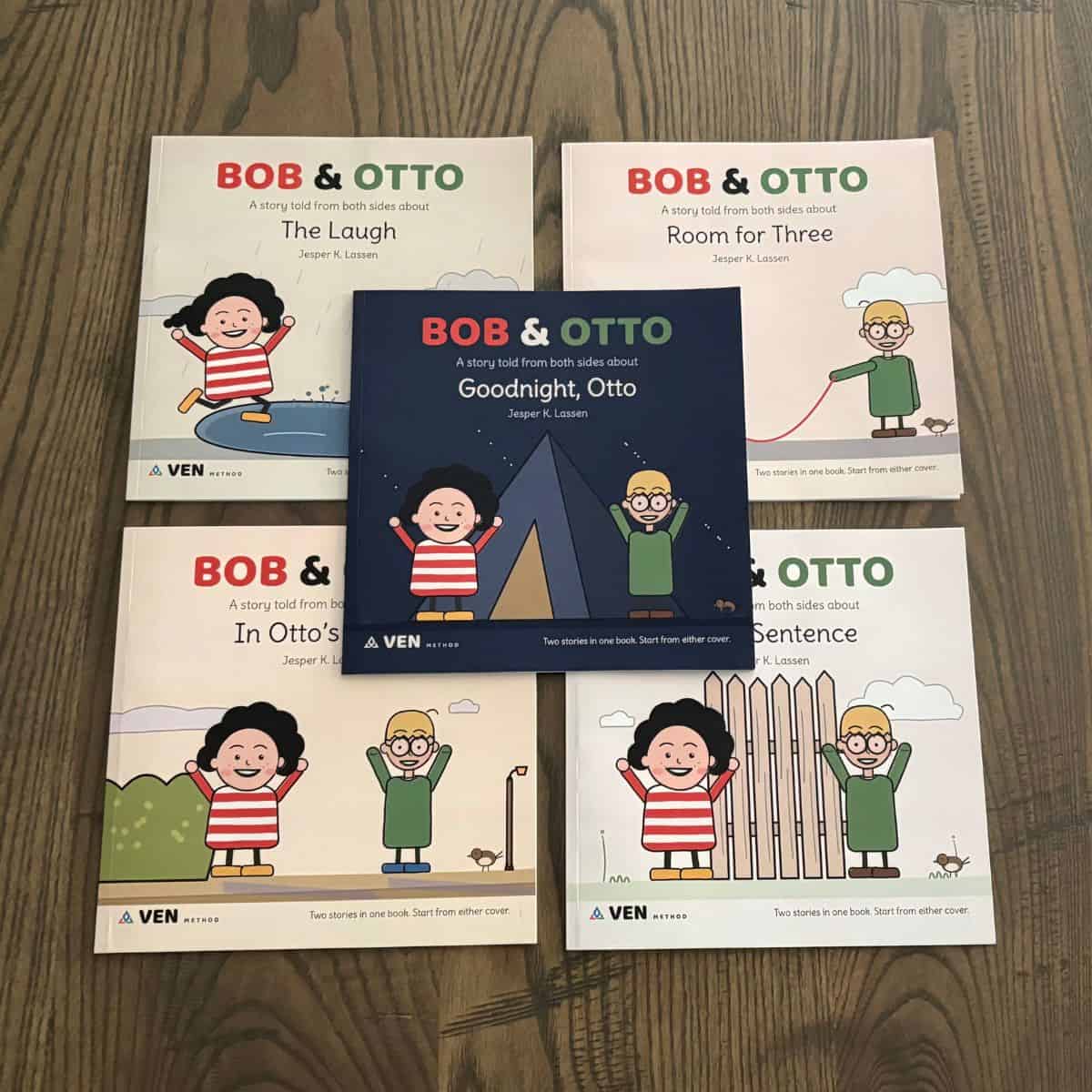
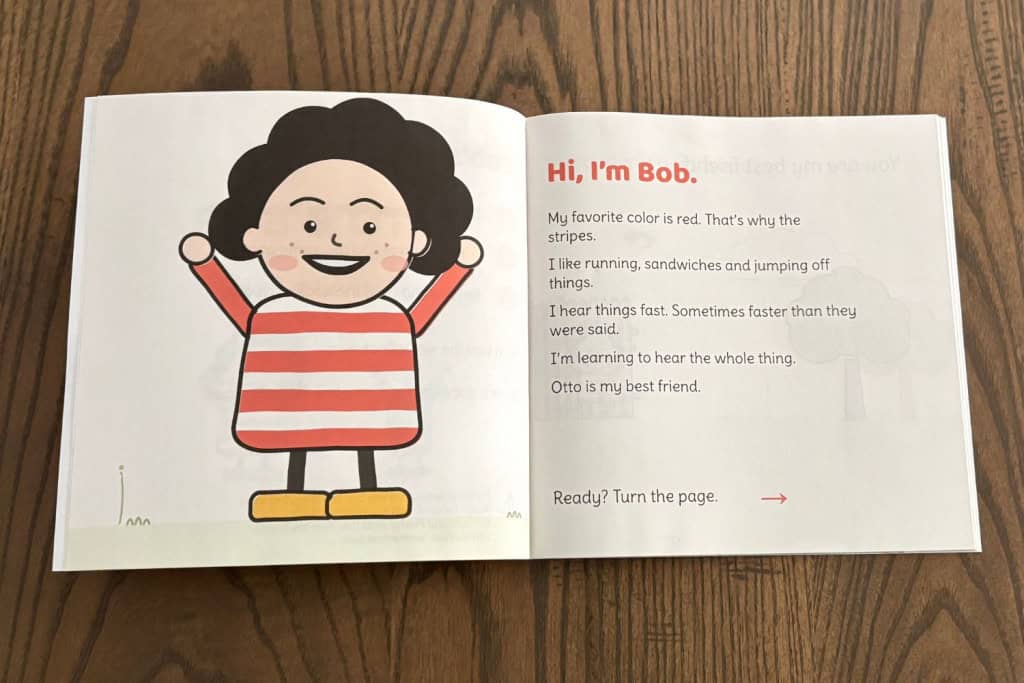
Each Bob & Otto story starts with a short explanation of Bob's point of view, followed by his version of the story taking place. When you've finished Bob's story, you turn the book over to find Otto's story.
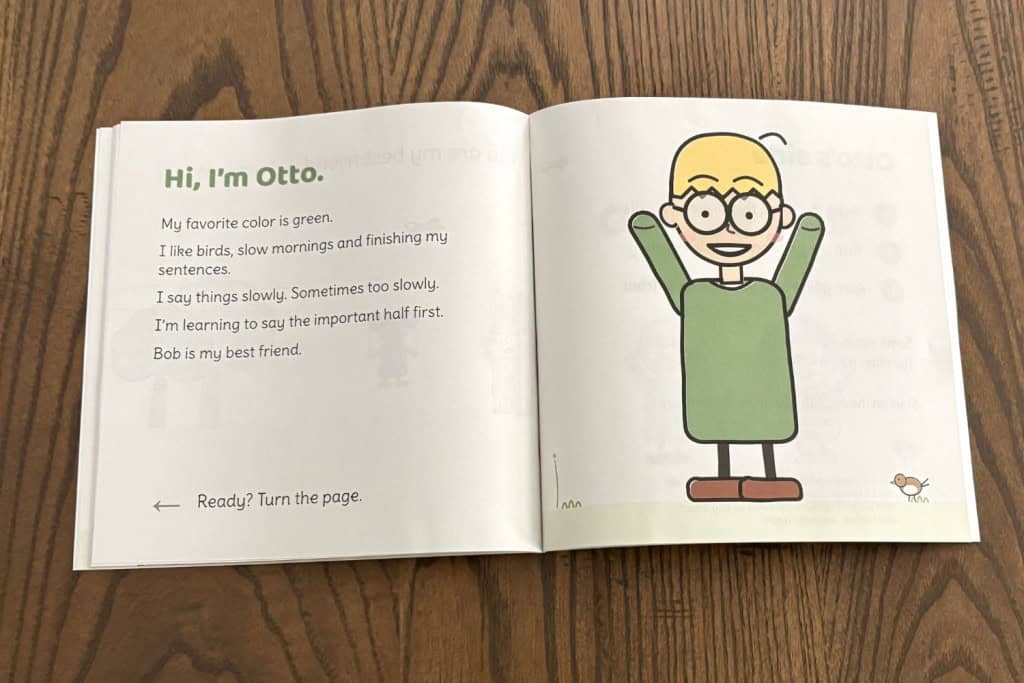
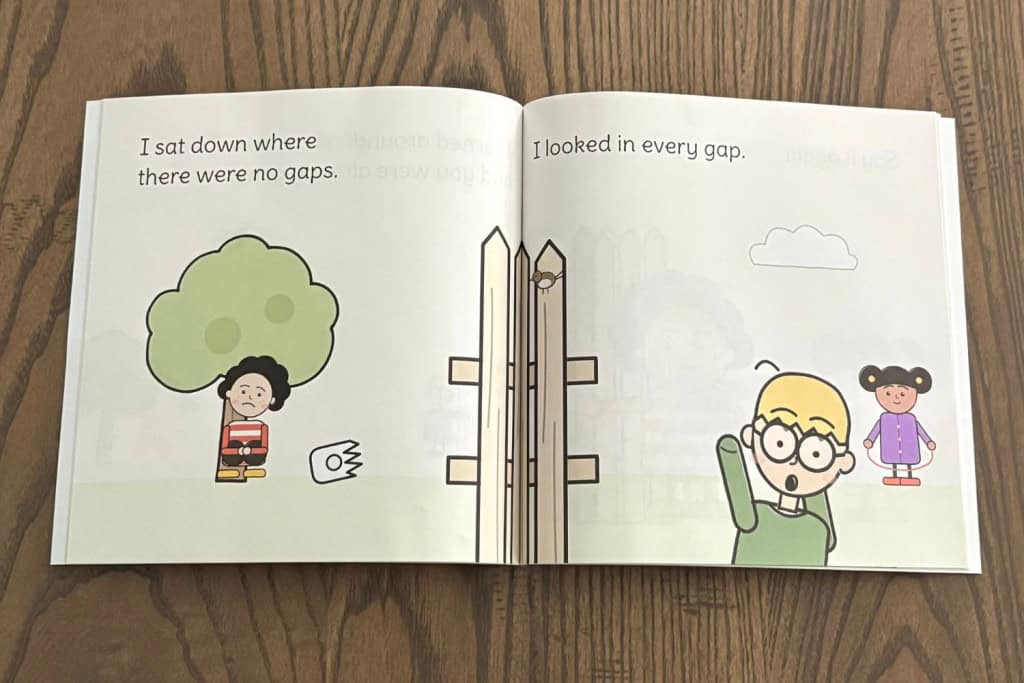
Again, you'll first read Otto's point of view, then read his version of the very same story taking place.
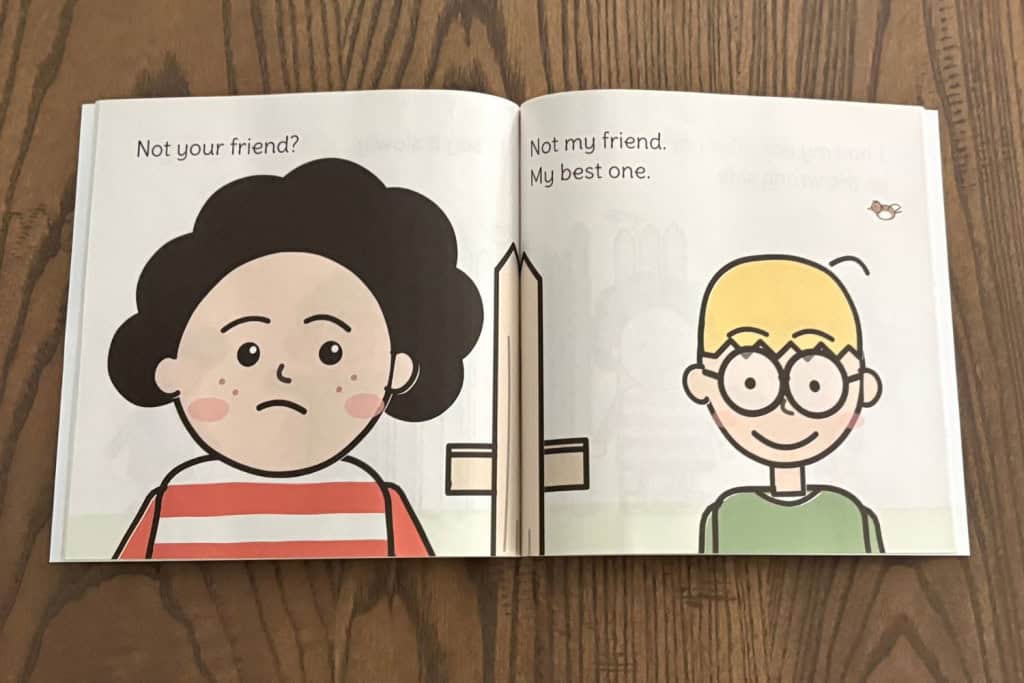
Why in the world would an author write a book in this format? Read one and you'll understand!
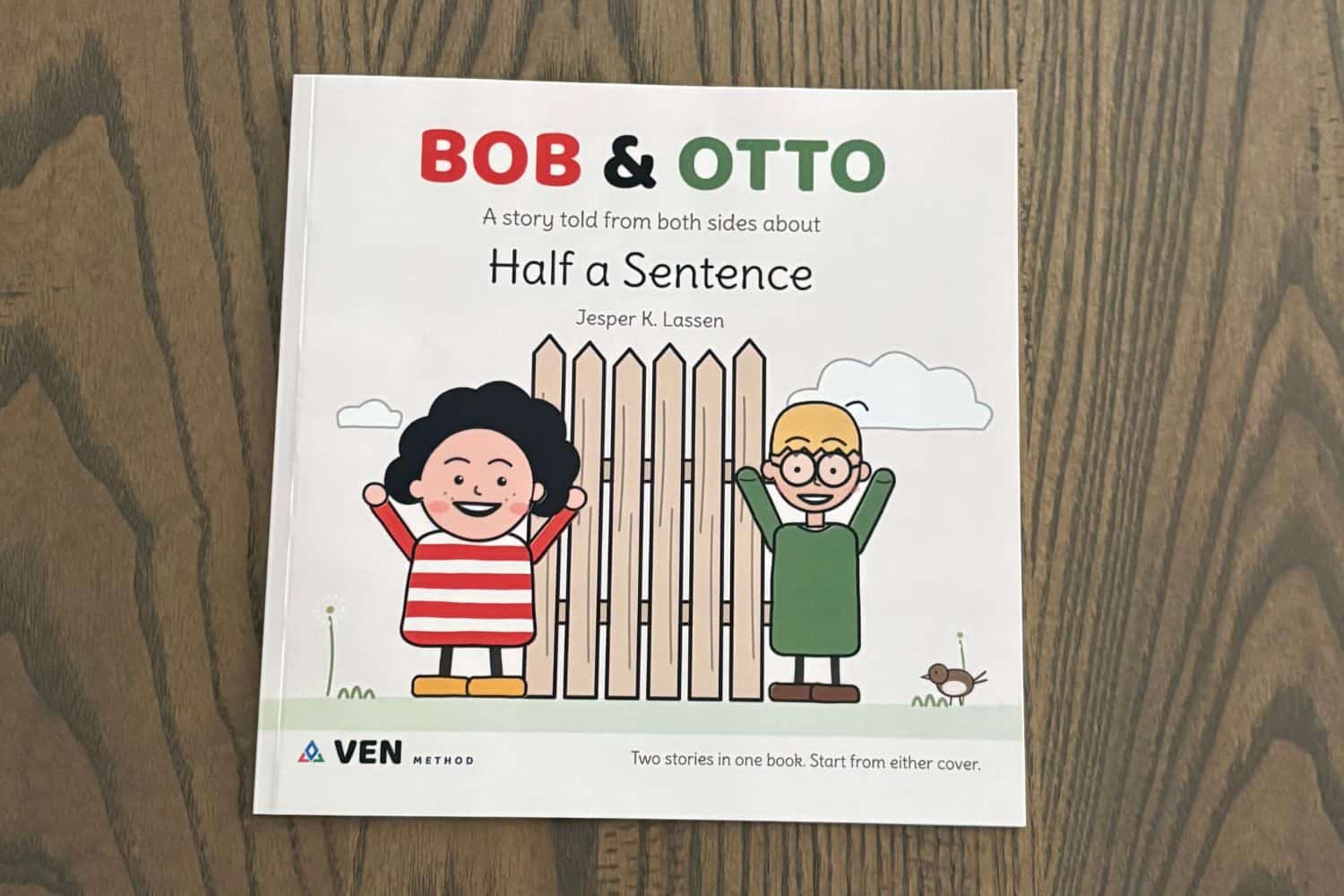
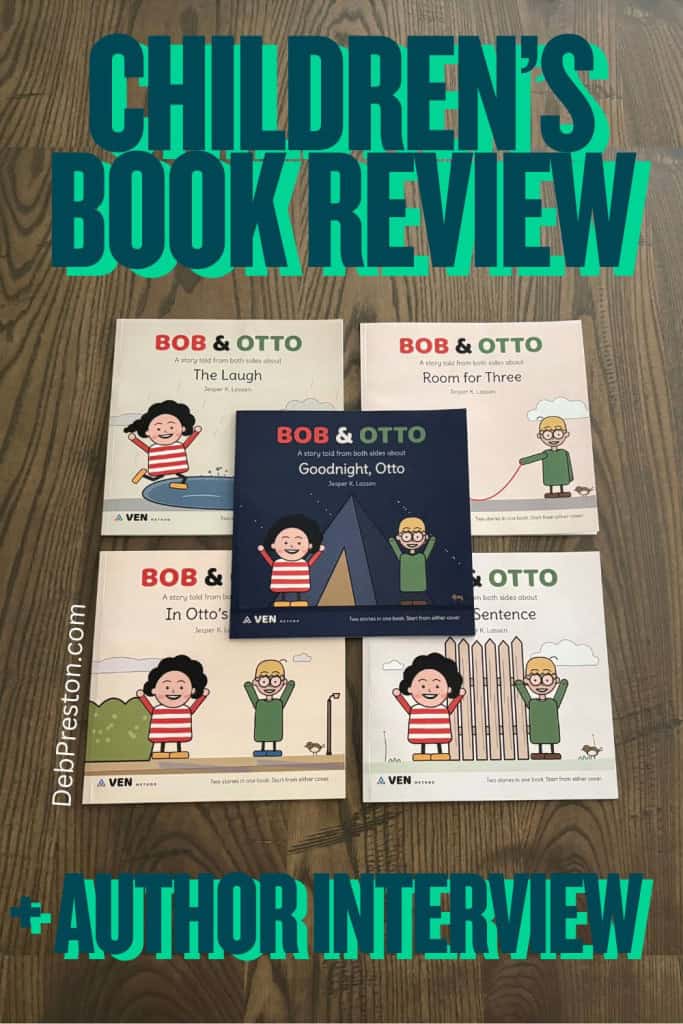
In Half a Sentence, we learn from character introductions that Bob often jumps to conclusions, rather than sticking around to hear the whole story, while Otto speaks slowly, and sometimes forgets to start with the most important bits.
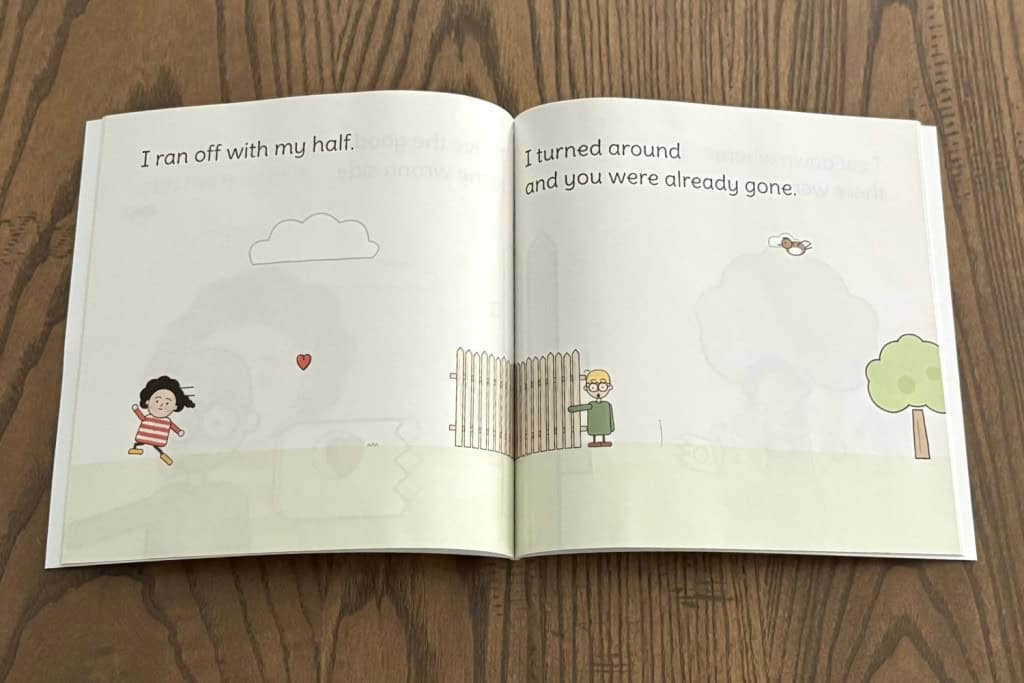
In this story, Bob overhears his friend Otto saying through a fence, "Bob is not my friend." He's hurt and runs away.
But when you turn the story over, you realize that Otto actually said, "Bob is not my friend. My best one." Otto learns to communicate more carefully, Bob learns to listen more carefully, and the friends are reunited by the end of each story.
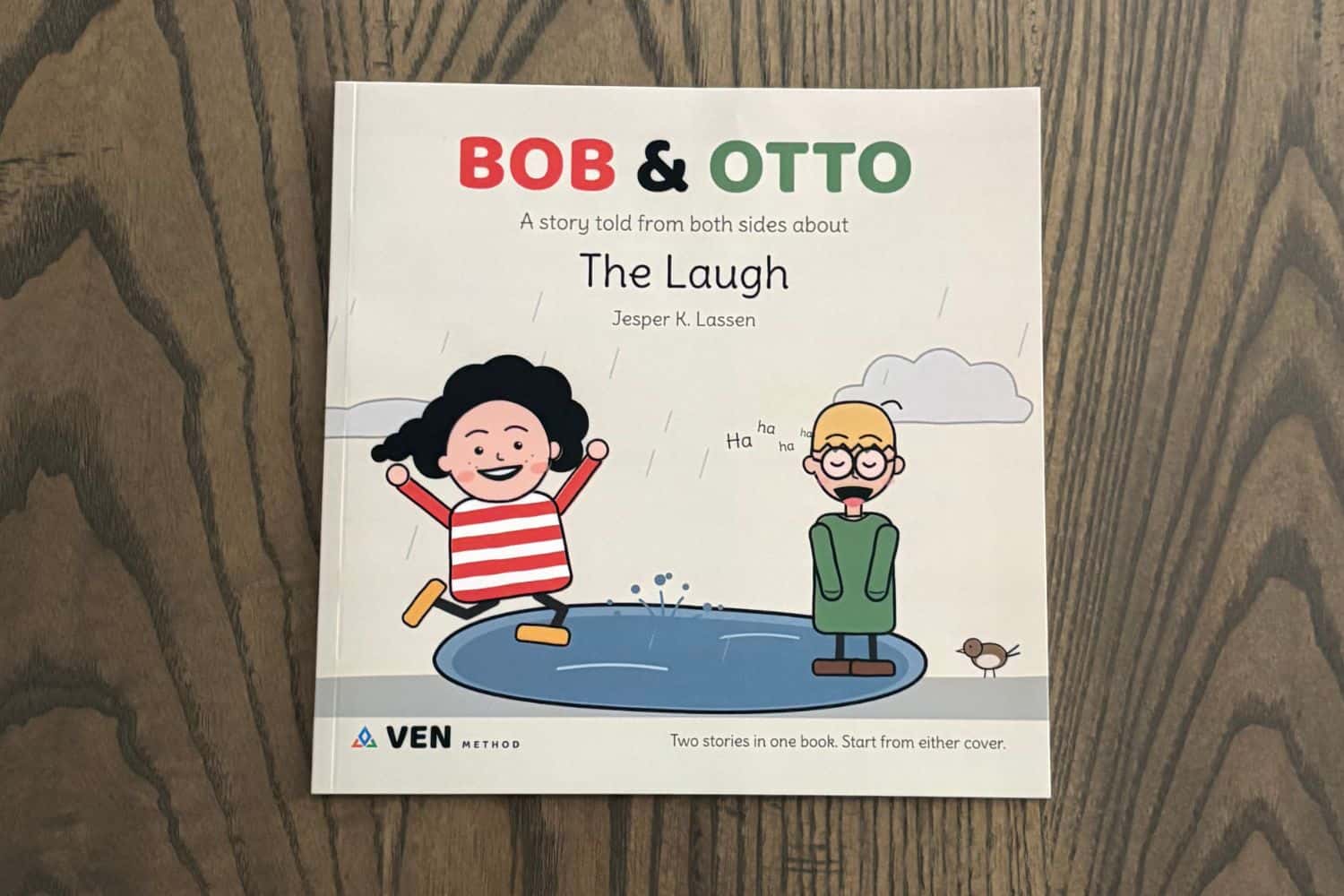
In The Laugh, Bob falls into a puddle and is hurt when he thinks his friend Otto is laughing at him. But when you turn the book over, you learn that Otto is actually laughing at himself.
Bob learns that a laugh can mean lots of things. Otto learns it's wise to control your laughter sometimes, or to at least explain why you're laughing.
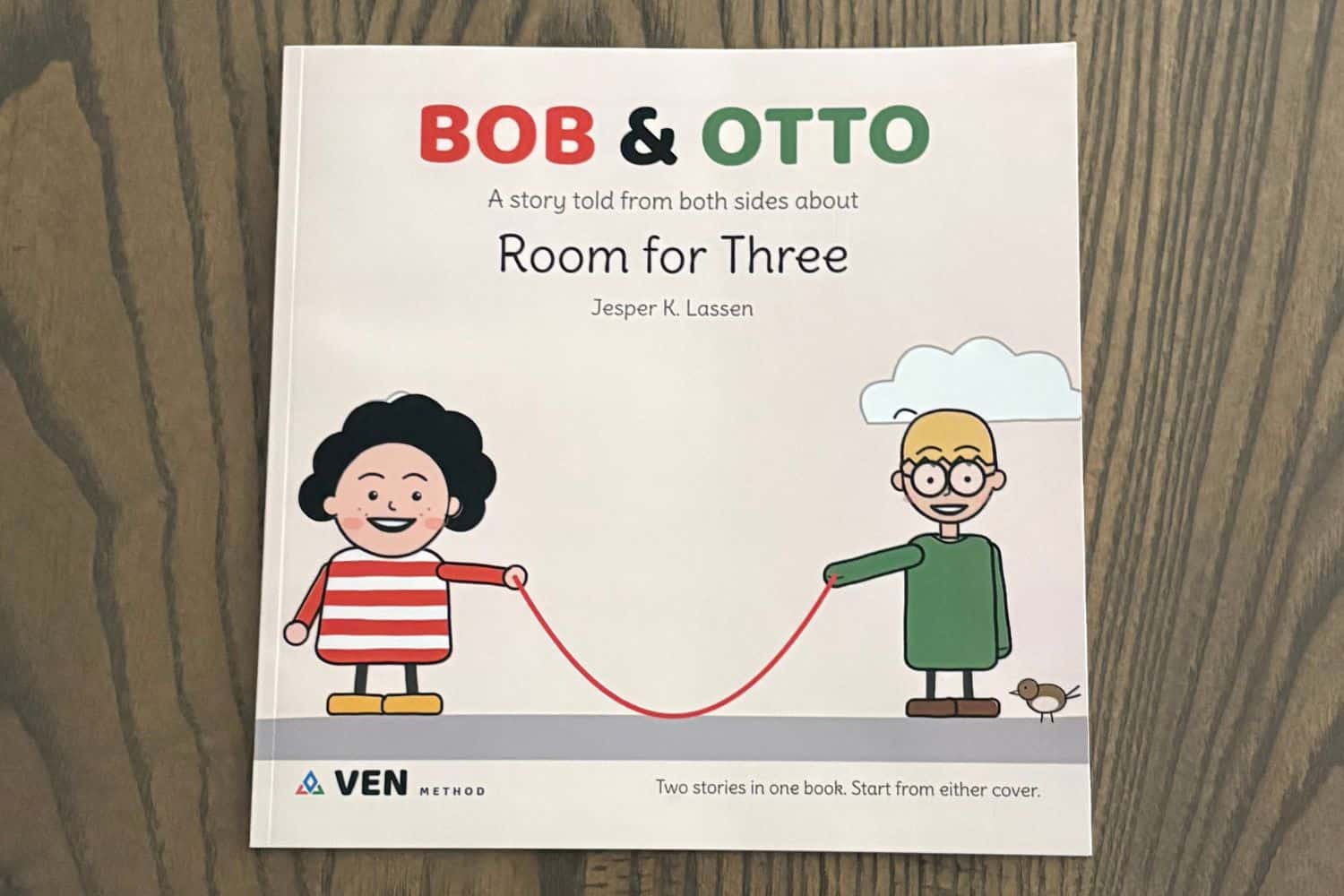
In Room for Three, Bob believes that Otto has made a new best friend. But when you turn the book over, you learn that Otto was actually telling his new friend all about his best friend Bob, and excited to finally have enough friends to jump rope together.
Otto learns to choose his words more wisely, Bob learns to ask rather than assume, and both boys agree that there's always room for friends.
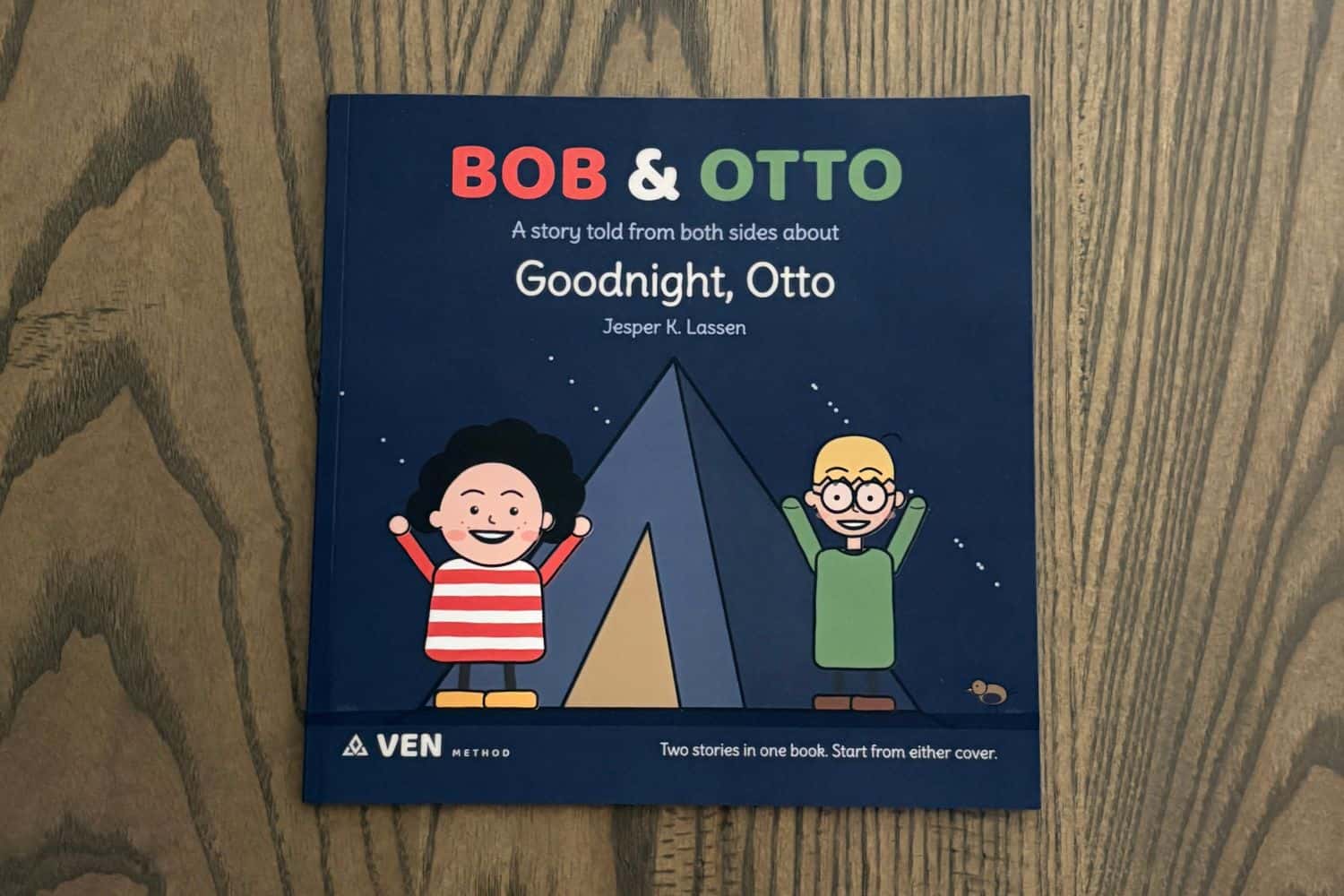
In Goodnight, Otto, Bob thinks Otto is upset with him, since he doesn't say a word. But when you turn the book over, you learn that Otto gets quiet when he's happy! (Gosh, this is a common misunderstanding with adults, too!)
Bob learns not to assume someone else's feelings, Otto learns to communicate his feelings rather than assuming others understand, and both boys enjoy their campout!
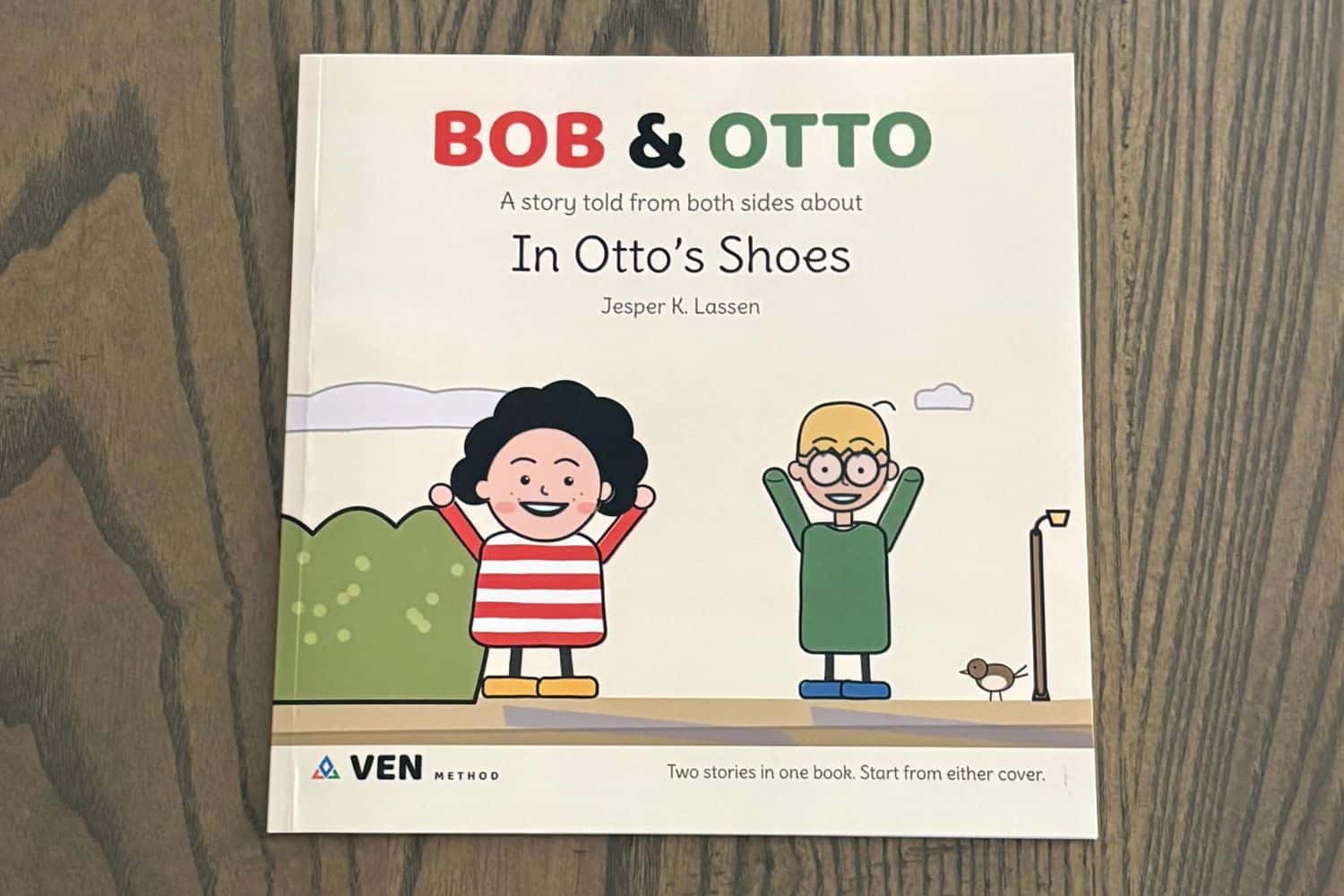
And finally, in In Otto's Shoes, Otto experiences pain as he tries out a new pair of shoes. Bob notices his friend's discomfort, offers to swap shoes, then experiences the pain for himself.
Otto learns he shouldn't keep it to himself when he's hurting, Bob learns to empathize with others before getting to work "fixing" it, and both boys learn to literally walk a mile in one another's shoes.
I really like the unique approach the author takes with these books. It's a format I've never seen before and the second I heard him describe it, I thought it was such a cool idea!
You're seeing both sides of the story figuratively, while reading it from both sides of the book literally. I think that double "both sides" approach really helps to drive the point home for young children (and their parents and teachers!).
Seeing the same story two different ways also helps to teach children lessons that I think are difficult to convey in any other way.
Things like not assuming someone else's intentions, making sure you've heard the whole story, and communicating clearly instead of assuming others know something, are usually lessons we have to learn through personal trial and error. I love the idea of planting the seeds of these concepts at a young age, and in such an unassuming way.
I also appreciated that outside of the character introduction pages, these books say a lot in just a few simple words (5-10 words per page). That means it's a book that parents/teachers can read to and discuss with young children, but also a book that early readers can pick up and read for themselves later!
Overall, this is a thought-provoking, discussion-inducing series that kids and adults alike are sure to enjoy. You can find the Bob and Otto series on Amazon.
Bob & Otto Author Interview
Want to learn more about author/illustrator Jesper K. Lassen? I did too! He was gracious enough to field a few questions and share what’s next for him!
Deb: The Bob & Otto series offers such a unique approach to social-emotional learning. What inspired you to write it?
Jesper: I believe connection is something that can be taught. Most of us were left to pick it up by luck.
I wanted a way to make something as complex as identity understanding as tangible as flipping a book. That is why Bob & Otto exists.
Read one friend's side. Turn the book over.
Same pages, same words, other friend's story.
The child isn't told to see the other side. They hold it.
Deb: I know a parent should never have a favorite child but...what's your favorite book in this series and why? (Shh, we won't tell them!)
Jesper: Half a Sentence. It was the first one I wrote, and it still hits closest to home.
Bob only hears half of what Otto says, leaves, and later we find out Otto was trying to finish the sentence. That pattern is painfully familiar.
I can see myself in it. Childhood misunderstandings, and the adult ones too, where we react to a fragment and miss the rest.
(Don't tell the other four.)
Deb: These books open really interesting conversations about perspective, communication, and mindset. Do you have any tips for parents who want to use your books to guide deeper discussions with their kids?
Jesper: Keep it playful.
If it feels natural, give Bob one voice going forward and Otto a different voice when you flip and read the other way. Kids usually love that.
This is meant to be fun, not feel like a lesson or a hack.
Afterward, keep the talk light: Which version is your favorite? Which perspective do you like most? Which one do you want to hear again?
Letting them choose a starting cover is already practicing perspective.

Deb: You developed the VEN Method. Can you tell us more about that, as well as how readers can get involed?
Jesper: VEN Method is the company behind the books. Ven means friend in Danish.
At its center is The Connection Protocol, which we publish free in full on venmethod.com so anyone can use it. Teachers can run it inside the subjects they already teach, which is how we found a way to bring social-emotional learning into the lesson without adding a second block to plan.
Bob & Otto is the paper version of the same idea for younger kids.
If someone wants the protocol, it's on venmethod.com. If they want the books or the free flip demo, bobandotto.com.
Deb: Your biography mentions that the school where you grew up in Denmark taught social and emotional skills from an early age. That's a blessing not afforded to many! In fact, many adults are still struggling to develop those skills. Do you have any advice for adults who want to improve themselves in that way?
Jesper: Start with one hard habit: notice when you assume you already know what someone meant, and ask one clarifying question instead.
Adults often skip the step these books force kids to take, which is holding two versions of the same moment.
You don't need a course for that. You need repetition.
The free protocol on venmethod.com is there if you want a fuller classroom-style practice.
Deb: I visited Denmark 20 years ago and fell in love with the culture and diversity there. It's a truly beautiful place! Just for fun, what was your initial impression of the United States when you first moved here?
Jesper: I'm glad Denmark stayed with you. For me, the first trip shaped how I see the United States.
The first was FETC in Orlando, sitting with teachers, counselors, and principals and hearing their work firsthand.
That was my first time in the US, and the scale hit me right away. How big the system is, and how much those roles carry.
We also went to the Innovative School Summit in New York in February this year to meet educators where they are, learn what they were missing, and figure out how practices that already work in Denmark could actually be useful in US classrooms.
Deb: What's your vision for the future? Do you have more books in the works? Or any upcoming projects you're excited about?
Jesper: I want effective perspective-taking and connection practice to be available to everyone, not gated behind a product. That is why the protocol is free.
Short term, more kids holding the flip at home and in classrooms. Longer term, more stories in the Bob & Otto line, and more ways for teachers to build that skill inside ordinary lessons.
If readers try a book or the free protocol and tell me what clicked, that helps me know what to make next.
Thanks so much for joining us today, Jesper!
You can check out the Bob and Otto books and free flip demo here, access the free Connection Protocol here, and pick up your own copies of the Bob & Otto series on Amazon here.
Related Posts

Disclosure: While all opinions are our own, we are a participant in the Amazon Services LLC Associates Program and other affiliate advertising programs, designed to provide a means for us to earn fees by linking to Amazon.com and affiliated sites, at no additional cost to you.