
How to Stop Binge Eating & Find Better Alternatives
Ever gone on an eating rampage? Eating a lot of food over a short period of time, then feeling super guilty or out of control afterward?
I can write about this topic because I've been there. In fact, I spent years and years there before I could knock it out for good.
The good (?!) news is that you and I are far from alone! Binge eating disorder is actually the most common eating disorder in the United States, affecting millions of people at every weight.
The best news is that you can learn how to stop binge eating! By understanding your triggers, eating regular balanced meals, and building healthier habits over time, you (Yes, you!) can kick binge eating to the curb once and for all.
How? It all starts with understanding your own patterns and triggers.
Understanding Patterns, Triggers, And Health Effects
Binge eating follows patterns that you can learn to spot once you know what to look for. Your triggers, eating habits, and body's response are all connected, and understanding this link is the first step toward taking control of it.
Recognizing Binge Episodes Versus Occasional Overeating
Eating a big holiday meal is not the same as binge eating. Occasional overeating doesn't usually come with feelings of guilt or a sense of losing control.
In contrast, a binge episode means eating large amounts of food in a short time while feeling out of control. It usually involves eating really fast, eating past the point of being full, or eating alone out of shame.
Binge eating becomes a binge eating disorder when it happens on a regular basis, usually at least once a week for several months.
Identifying Emotional And Environmental Triggers
Binge eating triggers are usually either emotional or environmental. So how can you learn to spot them?
Emotional eating is often driven by stress, boredom, or sadness rather than actual hunger. Negative emotions like loneliness or anger are a common trigger for many people who binge.
Environmental triggers can be found in your surroundings. Having a lot of junk food around, eating in front of a screen, or being near a friend or family member who overeats can all negatively shape your food choices.
Some common triggers include:
- Stress from work or school
- Emotional distress after an argument
- Low self-esteem or negative thoughts about your body
- Boredom or loneliness
- Easy access to tempting foods
Food can easily become a coping mechanism for handling these feelings. Even though we know deep down that eating won't fix the actual problem, it can help to numb negative feelings in the moment, making it a veeeeery tempting bandaid.
Take a few minutes to reflect on, and possibly jot down, your emotional and environmental binge eating triggers. Writing them down somewhere can serve as both a helpful reminder and a tool for identifying them when they crop up.
Understanding Restriction, Hunger, And The Binge Cycle
When you have a history of binge eating, it's tempting to skip meals or follow a strict diet to help balance out your binge. Ironically, though, skipping meals and following strict diets is often a trigger for binge eating.
Mental restrictions surrounding food hold the power to create extreme hunger, making your body crave large amounts of food. This can kick off a binge-restrict cycle: you restrict food, feel extreme hunger, binge, then feel guilty, and restrict again.
Restrictive food intake disorder and other extreme diet patterns often have the opposite effect of what they intend, since cutting out too much food can trigger the very binges you're trying to avoid.
Take a few minutes to assess your everyday eating patterns. Make sure the bar isn't set so high that you can't consistently reach it..
Considering Emotional And Physical Health Risks
We often focus on the physical effects of binge eating, like weight gain, high blood pressure, high cholesterol, and heart disease. But it can also impact our mental health!
A binge eating disorder can trigger and/or exacerbate anxiety disorders, bipolar disorder, and other mental health conditions.
Repeated binge cycles can also affect our nervous system, making it harder for our bodies to send normal hunger and fullness signals. This can leave us struggling to recognize when we're actually physically hungry.
Building A Supportive Recovery Plan
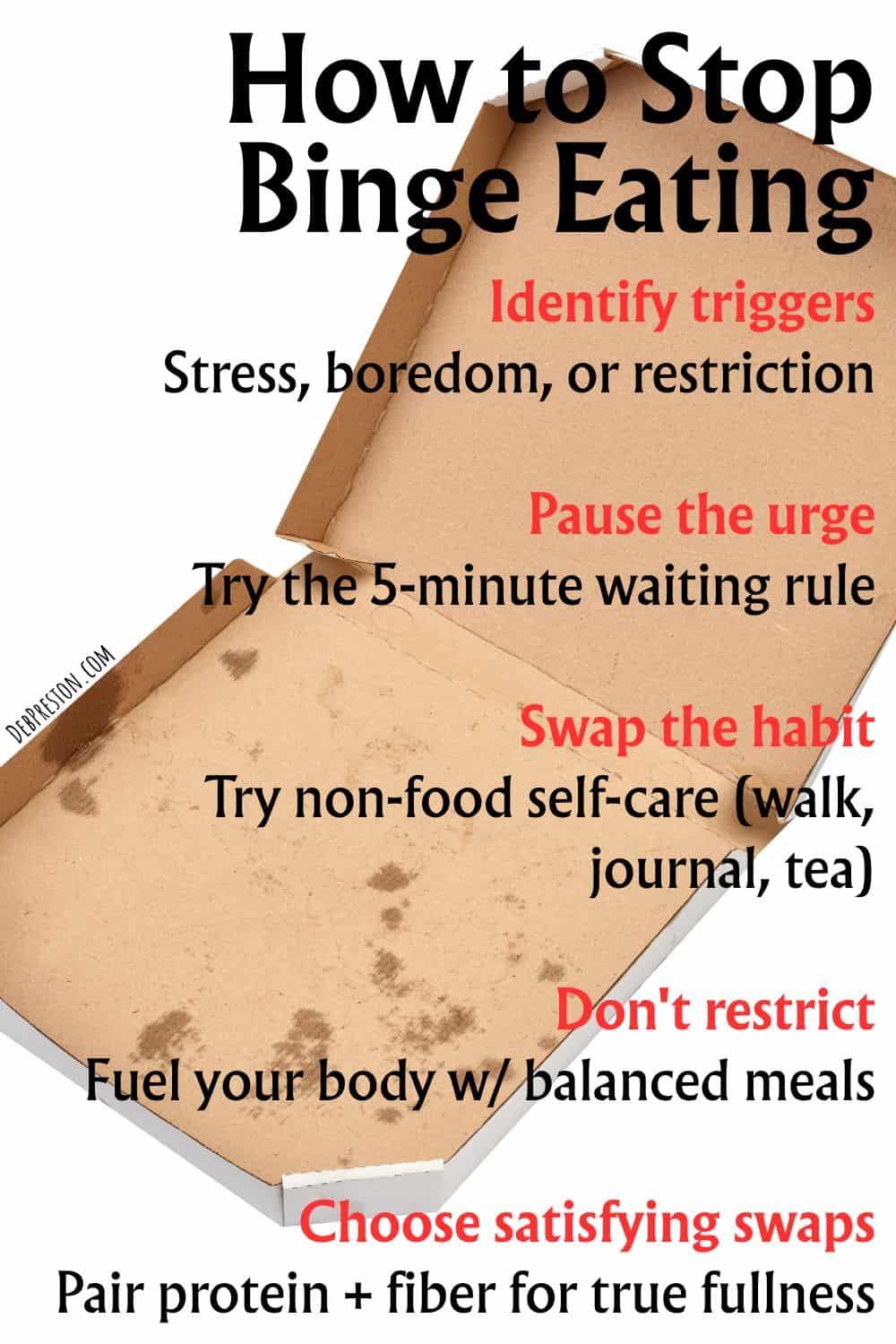
Now that we've narrowed down our triggers and patterns, we can make a plan to stop binge eating once and for all! It's important to include what you eat, how you cope with feelings, and who you turn to for help, in your recovery plan.
Creating Regular, Nourishing Eating Habits
Arguably the most important step in your recovery will be building regular eating habits. Skipping meals usually leads to more binging, not less.
Try to eat something every three to four hours to help keep your blood sugar steady and lower the urge to binge later in the day. Even the most simple meal plan can help you stay on track.
Your plan doesn't need to be perfect! It just needs to include:
- Breakfast, lunch, and dinner
- One or two snacks
- A mix of protein, carbs, and fat at each meal
Contrary to what diet culture would have you believe, healthy eating isn't about rules or restriction. It's about giving your body steady fuel so you feel less out of control around food.
Using Mindful And Intuitive Eating Skills
When you do eat, it's important that you do so both mindfully and intuitively.
Mindful eating means paying attention while you eat.
Turn off the TV. Put down your phone. Notice the taste, texture, and smell of your food instead of eating on autopilot.
This skill will help you slow down. And when you slow down, you can more easily notice when you feel full.
Intuitive eating goes a step further. It means trusting your body's hunger and fullness signals instead of following strict food rules.
It took a good long while for me to say goodbye to the Clean Plate Club, and to convince myself that you don't have to eat unhealthy leftovers just to avoid wasting food. Allowing your body's natural signals to guide mealtimes will help to strengthen those signals when it comes time to resist a binge.
Together, these skills will help you build a healthier relationship with food. Over time, this will lead to positive changes in how you think about eating.
Managing Urges And Emotional Distress
But that will take time, right? So what are you supposed to do in the meantime, when the urge to binge strikes?
Binge urges often come from stress, sadness, or anger, not just hunger. Learning to manage these feelings differently is an important part of recovery.
When an urge hits, tell yourself you have to pause for five minutes before acting on it. Then ask yourself what you're feeling in that moment that's making you want to binge.
A few helpful distractions coping tools could include:
- Deep breathing or a short walk
- Calling a friend
- Writing down your feelings
- Taking a warm shower
While these pauses might not thwart every binge, practicing them consistently will lower the power of your urges over time. The goal isn't to learn to ignore your feelings, but to find other, healthier ways to handle them.
Getting Evidence-Based Professional Support
A lot of people with binge eating disorder need some form of professional support to fully recover.
Your doctor can perform a physical exam to monitor your overall health, and help you build out a plan for recovery. A registered dietitian can offer nutrition counseling and help you build a meal plan that fits your life.
Mental health professionals can utilize evidence-based care such as:
| Therapy Type | What It Helps With |
|---|---|
| Cognitive behavioral therapy | Changing thoughts that lead to binges |
| Dialectical behavior therapy | Managing intense emotions |
| Interpersonal psychotherapy | Improving relationships tied to eating |
Healthcare providers can also connect you with local or online support groups. Hearing other people's stories can often make your own struggles feel less isolating.
Don't know where to start? Ask your healthcare provider for some guidance and referrals.
So...now you know how to stop binge eating. Next up: Putting these steps into practice!
Be sure to bookmark this page and come back to it often as you work through identifying your patterns and triggers, building regular and mindful eating habits, learning new techniques to manage big emotions, and building your support team.
Did I miss any tips or tricks you've learned to curb binge eating? Please be sure to share your best advice (and any questions!) in the comments.
And friend? You've got this!
Frequently Asked Questions
Here are answers to a few common questions about urges, triggers, food choices, and what to do before and after a binge.
What can I do when I feel an urge to binge eat?
When you feel the urge to binge, try pausing for five minutes before you act. This short delay can help the urge pass or weaken.
During this pause, try a quick activity like walking outside, texting a friend, or doing some deep breathing. You can also ask yourself if you're truly hungry or if something else is going on, like stress or boredom.
Keeping your hands and mind busy will make it easier to ride out the urge. Over time, this pause-and-check method can help you feel more in control.
How can I tell the difference between hunger and emotional eating?
Physical hunger builds up slowly and can be satisfied by many types of food. Emotional eating often comes on fast and craves specific comfort foods, like chips or sweets.
You can check in with your body before eating. Ask yourself if your stomach feels empty or if you're eating to cope with a feeling like sadness, anger, or stress.
Emotional eating usually doesn't stop once you're full. If you keep eating past fullness, this may be a sign the eating is tied to emotions rather than hunger.
How long does a binge eating episode usually last?
Most binge eating episodes last less than two hours. This time frame is part of how binge eating disorder is defined by doctors.
The exact length can vary from person to person. What matters more than the length is the pattern.
If episodes happen at least once a week for three months, it may point to binge eating disorder.
Which foods can help me feel full and reduce overeating?
Foods high in protein and fiber tend to help you feel full longer. A few examples include eggs, beans, lentils, chicken, and Greek yogurt.
Whole foods like vegetables, fruits, and whole grains also add bulk and fiber to meals. This can help you feel satisfied without feeling the need to eat large amounts.
Drinking water with meals can help too! Water takes up space in your stomach and can support feelings of fullness alongside food.
What should I do after a binge eating episode?
After a binge, your first goal should be to avoid harsh self-criticism. Speaking to yourself with kindness can help lower stress and reduce the chance of another binge soon after.
It also helps to return to your normal eating schedule at the next meal or snack time. As I mentioned earlier, sdkipping meals to "make up" for a binge can lead to more intense hunger and another binge later.
It's also vital to take a few minutes to think about what triggered the episode. Writing it down can help you identify patterns over time.
Can I lose weight while recovering from binge eating?
Weight loss is definitely possible during recovery, but it's not guaranteed for everyone. Some people lose weight, some maintain their weight, and others actually gain a small amount as their eating patterns become more regular.
Trying to lose weight too quickly during recovery can sometimes trigger more binges. A slower, steady approach tends to better support long-term success.
Remember that recovery should focus first on stopping the binge cycle and building steady eating habits. Losing weight is a separate goal that will be easier to focus on once you've successfully mastered how to stop binge eating.

P.S. Ready to conquer your emotional eating? Our free printable food journal will get you there, with prompts for what you ate, how you felt, and hunger levels! Get yours HERE.
Related Posts



Disclosure: While all opinions are our own, we are a participant in the Amazon Services LLC Associates Program and other affiliate advertising programs, designed to provide a means for us to earn fees by linking to Amazon.com and affiliated sites, at no additional cost to you.