Children’s Book Review | There's an Octopus in My Class (+ Author Interview!)
There's an Octopus in My Class Review
There's an Octopus in My Class, written by Matt M. Morano, explores the very real question every child (and parent!) faces: What happens when you just don't like someone?
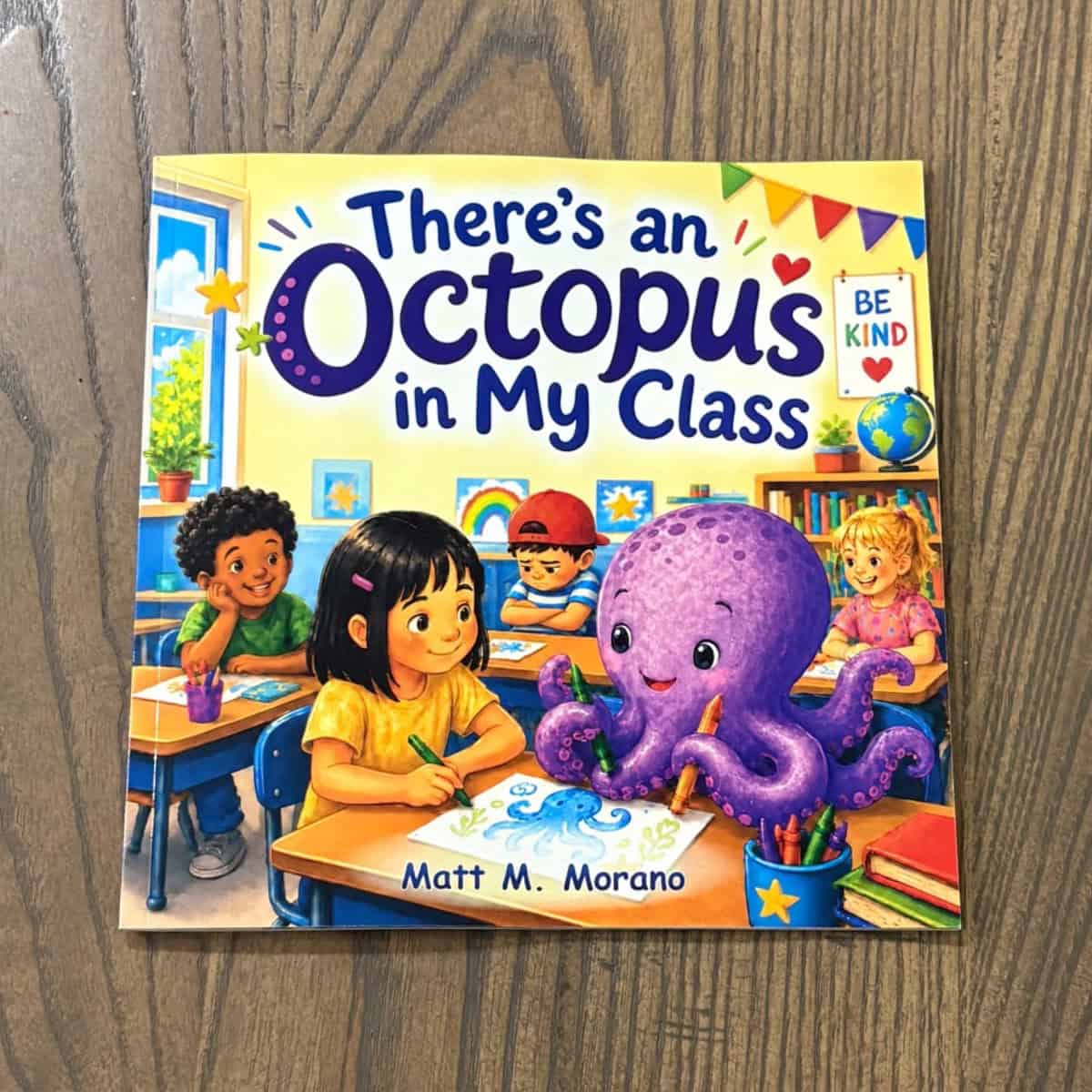
The book opens on a young boy who doesn't want to go to school due to his classmate - an octupus! His parents explain that you don't have to like everyone, but you still have to be kind.
At school, the boy watches the octupus from a distance, focusing on all the ways the octopus is different from the human kids. The boy sits by himself, sadly watching his classmates talk and laugh with the octopus in the classroom and at lunch.
At recess, he's happy to play soccer with his friends, and even happier that the octopus doesn't join them. But when their team needs an extra player, the boy remembers what his mom told him and decides to invite the octopus to play.
As the octopus joins the other children, readers discover that he was never a real octopus at all, but a human child who was simply different. Both boys smile as they run onto the field.
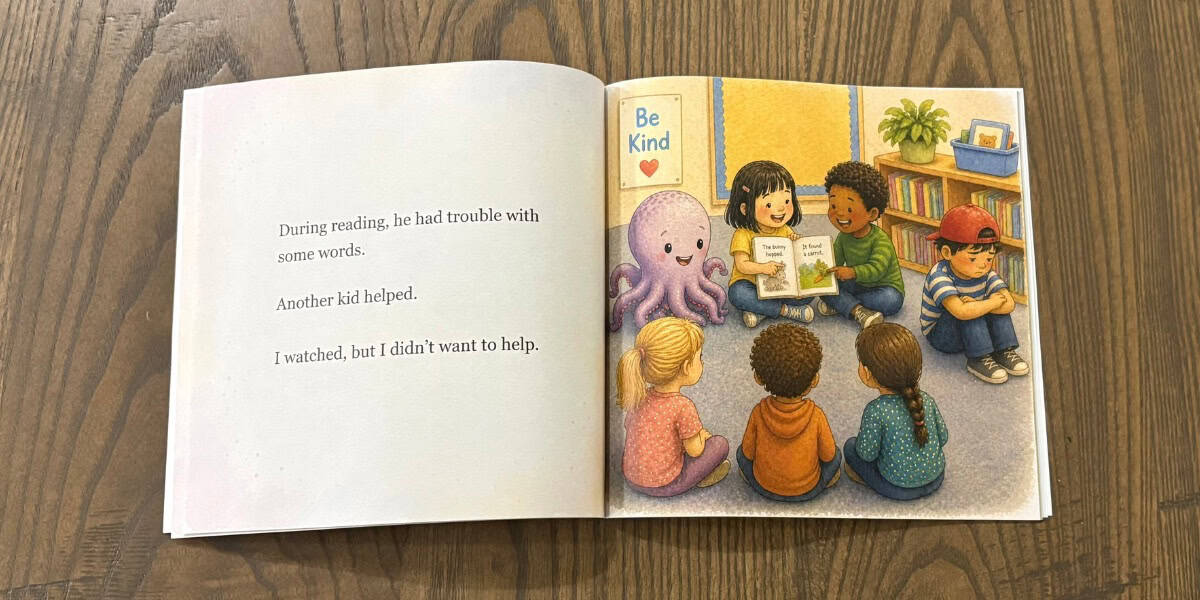
I loved the honesty of this story. Sometimes, there are people you just don't like, even though you can't quite put a finger on why you don't like them! It's true for children as well as adults.
I always hate when books place a pressure on kids that we don't even place on ourselves as adults. The reality is that people have different personalities and preferences, and there are going to be some people who just rub you the wrong way. Maybe you'll become friends over time and maybe you never will! The trick is learning how to navigate those situations with mutual respect.
With that said, I loved this author's take on accepting the reality of differences and teaching kindness, all without forcing readers into new friendships. He leaves the decision with the young reader, which I believe is a hallmark of every great children's book.
I also loved the young boy's unfiltered honesty in the story. He said things like, "I didn't like him," "I did not want to sit next to him," and "I was glad he didn't come with us."
It's so important to voice children's real thoughts and feelings without sugarcoating them. I think children will be surprised to hear these kinds of thoughts spoken out loud. Hearing them will help kids to feel seen and cause the story's resolution to resound more deeply.
And finally, I loved all of the speaking points at the back of the book, including "A Note for Parents and Caregivers" and "Helping Your Child Respond." As a parent myself, I always appreciate a little extra guidance helping me connect a story to my child's real-life experience, and the author provides some great conversation starters!
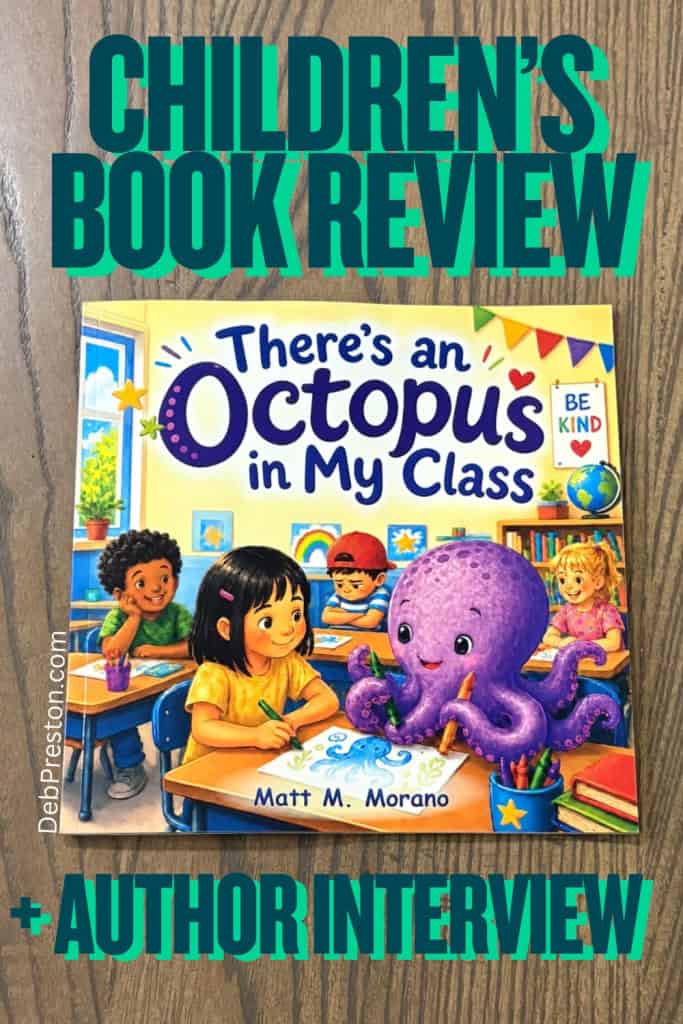
Overall, this is an honest and thoughtful book kids and parents alike are sure to enjoy. You can find There's an Octopus in My Class on Amazon.
There's an Octopus in My Class Author Interview
Want to learn more about author Matt M. Morano? I did too! He was gracious enough to field a few questions and share what’s next for him!
Deb: There's an Octopus in My Class shares such an important message! What inspired you to write it?
Matt: I've spent a good portion of my professional life helping people understand themselves and how they relate to others. One thing I've learned is that we tend to make judgments about people pretty quickly, often before we've had much of an opportunity to get to know them. Children aren't any different. In fact, they're sometimes more honest about those judgments than adults are.
I wanted to write a story about a child who sees someone as different and decides, almost immediately, that he doesn't like him. What's interesting is that none of the other children seem to have a problem with this classmate. They're perfectly happy playing and spending time with him. The problem really exists in the mind of the boy telling the story.
I also wanted the message to come through naturally, without having an adult explain everything or deliver a lecture about being nice. Sometimes our perceptions change simply because we give someone a chance. That's really what the story is about.
Deb: When I was a kid, it was okay if you didn't like someone, as long as you were kind. I've noticed a huge shift over the last decade or two where kids are now expected to easily connect and build relationships with everyone they meet. How do you think parents can strike a healthy balance between encouraging kindness while still allowing for differences in personalities and preferences?
Matt: I think you've touched on a really important distinction. We can teach children to be kind without expecting them to be friends with everyone. Those are two very different things.
Not everyone is going to connect, and that's perfectly normal. Adults certainly don't like everyone they meet, so it seems unreasonable to expect children to do something we're not particularly good at ourselves.
I think parents can help by separating how we feel about someone from how we treat them. A child doesn't have to enjoy another child's company, but that doesn't mean it's okay to be unkind, deliberately exclude someone to hurt them, or make them feel inferior.
There's a line in the book where the boy's mother tells him, "You don't have to like everyone, but you still have to be kind." That's probably the clearest expression of what I wanted children to take away from the story.
At the same time, I think it's worth encouraging children to question some of their first impressions. They may discover that someone they initially disliked is actually pretty interesting. That doesn't mean they have to become best friends, but they might find they have more in common than they expected.
Deb: What if the child reading this book relates more to the octopus? Any advice for parents and teachers who'd like to encourage them with this story?
Matt: I actually think that's an important way to look at the book, and it's something I'd encourage parents and teachers to explore.
The octopus isn't doing anything wrong. He's simply being himself. The other children seem to like him, and he doesn't appear to understand why this particular boy wants nothing to do with him. There's something pretty sad about that, especially when you consider how often children experience rejection without really knowing why.
For a child who identifies with the octopus, I'd want them to understand that someone else's opinion doesn't determine their worth. Sometimes people make assumptions about us that have very little to do with who we actually are.
I'd also encourage adults to talk with children about what it feels like to be left out. Rather than immediately trying to fix the situation, give the child an opportunity to explain what happened and how it felt. Sometimes children need someone to listen more than they need someone to offer a solution.
One thing I wouldn't want is for a child to come away believing that if they're patient enough or nice enough, everyone will eventually like them. That's not realistic, and it's certainly not the message of the book. The octopus doesn't need to change who he is. It's the other boy's perception that changes.
Deb: This book is the second in your "There's a..." picture book series! Can you share a little about the series?
Matt: The idea behind the series is to take emotional experiences that can be difficult for children to understand and give them a physical form. In each story, an animal represents something that's happening emotionally or psychologically.
The first book, There's a Moose in My Attic, is about a little boy who makes a mistake and tries to hide it. His secret takes the form of a moose that he hides in the attic.
As his worry and shame grow, the moose becomes harder and harder to ignore. Eventually, he tells his parents what happened and discovers that admitting a mistake isn't nearly as frightening as he'd imagined.
In There's an Octopus in My Class, the animal represents something different. The octopus isn't a secret or a feeling the boy is trying to hide. Instead, he represents the way the boy perceives a classmate he doesn't particularly like. Once he gives that classmate a chance, his perception changes.
What connects the books is the idea that children can understand some pretty complicated psychological concepts when we make them concrete. I also want the stories to be enjoyable on their own. A child should be able to laugh at the idea of a moose hiding in an attic or an octopus sitting in a classroom without feeling like they're being taught a lesson.
Deb: As an educator and therapist with over two decades of experience, you're uniquely qualified to translate complex emotional experiences into images and conversations children can understand. Do you have any advice for parents struggling to work through complex and sometimes intense emotions with their children?
Matt: One of the most important things I've learned is that children don't always have the vocabulary to explain what they're experiencing. Sometimes they don't even understand why they're feeling the way they do. Adults can have the same problem, although we're usually better at coming up with explanations!
I think the first thing parents can do is resist the temptation to immediately solve whatever is happening. When a child is upset, our natural instinct is often to make the feeling go away as quickly as possible.
We reassure them, offer advice, or explain why they shouldn't be so worried. Those responses usually come from a good place, but they can sometimes leave the child feeling as though we haven't really heard them.
I'd encourage parents to start with curiosity. Ask what happened, listen carefully, and help the child find words for what they're experiencing.
It's also important to remember that children are watching how we handle our own frustration, disappointment, and mistakes. What we model often has as much influence as what we say.
Stories can be particularly helpful because they give children a little emotional distance. It's sometimes easier to talk about why a boy is hiding a moose in his attic than to admit you're worried about something you've done yourself. Once that conversation begins, children may find it easier to talk about their own experiences.
I also think parents should give themselves a little grace. Nobody handles every difficult parenting moment perfectly. Sometimes the most valuable thing we can do is acknowledge that we could have handled something better and show our children what it looks like to make things right.
Deb: What's your vision for the future? Do you have more books in the works? Or any upcoming projects you're excited about?
Matt: I do have another book in development, tentatively titled There's an Otter in My House. It follows the same general approach as the first two books, using an animal to help children understand an experience that might otherwise be difficult to explain.
This one explores attention, impulsivity, and some of the everyday challenges associated with ADHD. The otter is energetic, easily distracted, and frequently gets sidetracked despite having the best intentions. I want the story to acknowledge those challenges without suggesting there's something wrong with the child experiencing them.
Beyond that, my next book is going to be for neurodivergent parents who are raising children who also happen to be neurodivergent. My background in psychology certainly influences what I write, and the goal is to provide useable, relatable information.
If a child enjoys the story, wants to hear it again, and maybe starts a conversation with a parent or teacher that wouldn't have happened otherwise, I'd consider that a pretty meaningful accomplishment.
Thanks so much for joining us today, Matt!
You can follow Matt's journey on his author website and pick up your own copy of There's an Octopus in My Class on Amazon.
Related Posts



Disclosure: While all opinions are our own, we are a participant in the Amazon Services LLC Associates Program and other affiliate advertising programs, designed to provide a means for us to earn fees by linking to Amazon.com and affiliated sites, at no additional cost to you.